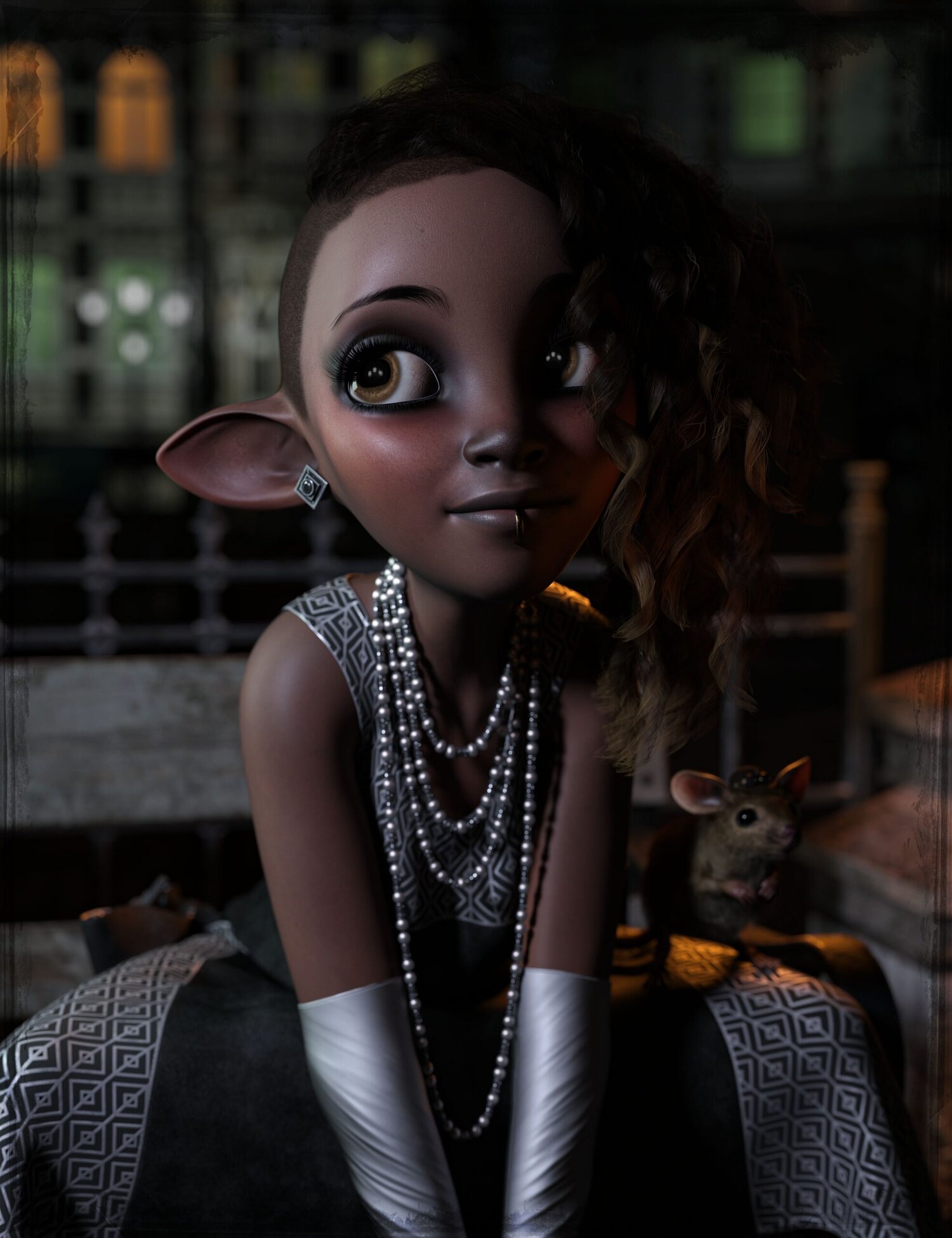
If you have been exploring DAZ Studio storytelling scene ideas for any length of time, you already sense the difference between a render that stops someone scrolling and one that gets politely liked and forgotten. That difference is almost never technical. It is not resolution, poly count, or render time. It is the presence — or absence — of a story. Every deliberate choice you make about pose, lighting, environment, and props either adds to a feeling or dilutes it. When viewers linger on your image and find themselves asking what happened a moment before the scene was frozen, that is storytelling at work. This article gives you a practical framework for building exactly that kind of work: concrete scene types, step-by-step creative process, lighting strategies, and composition principles that consistently produce memorable results. If you would like a second opinion on your current creative approach before diving in, reach out and let us take a look at what you are building together — sometimes one focused conversation shifts everything.
Why Storytelling Transforms a DAZ Studio Render Into an Experience
Most artists begin a new render by asking, “Does this look realistic?” That is not the wrong question — but it is the second question. The first question is, “Does this make the viewer feel something?” A photorealistic character in a neutral T-pose communicates almost nothing. Add a torn letter in their hand, a candle burning low on a windowsill, and rain running down the glass behind them — suddenly the viewer is constructing a narrative. That gap between what is shown and what is implied is where emotional engagement lives.
DAZ Studio gives you an extraordinary toolkit for staging that gap. You have thousands of props, environments, characters, and lighting rigs to work with. The challenge is not scarcity of resources. The challenge is discipline: selecting only the elements that serve the story, and removing everything else. A cluttered scene signals uncertainty. A focused scene signals authorship.
The renders that spread across communities are almost never the most technically impressive ones. They are the ones where the viewer immediately asks, “What happens next?” or “What happened just before this?” That narrative tension is what you are building toward. If you want to explore curated assets specifically designed to support atmospheric scene-building, there is a growing collection of practical 3D resources worth digging into — from moody environments to character bundles built with storytelling in mind.
Understanding the Anatomy of a Memorable Scene
Every compelling render shares a recognisable structure, even when genres and styles differ widely. Think of it as a visual sentence with three parts: subject, context, and tension.
Subject
The subject is your main character or focal object — the element the viewer is meant to care about. Without tension, a render is a portrait. With it, it becomes a story.
Context
Context is the most consistently underused element. Artists spend enormous effort on character models and pose refinement, then place them in a generic interior with default lighting. The environment should be doing narrative work at every corner of the frame. A hospital corridor with flickering overhead lights communicates something completely different from the same corridor clean and brightly lit.
Tension
The tension is the unresolved element that keeps the viewer’s eye moving across the frame. Props are dialogue when your characters cannot speak. A single object placed deliberately — a child’s toy, a faded photograph, a weapon laid down rather than holstered — can carry an entire emotional chapter. The word that matters is deliberately. Every prop placement should be a conscious decision, not a space-filling choice.
Similarly, the time of day implied by your lighting carries enormous narrative weight. Golden-hour amber reads as warmth and possibility. Pre-dawn blue reads as anxiety or cold resolve. Harsh midday white reads as exposure or clarity. Make those choices with intention, and your scenes will feel genuinely authored from the first glance.
Seven DAZ Studio Scene Ideas With Real Storytelling Potential
Sometimes the most useful thing is a concrete starting point. The seven scene types below are each built around a specific emotional beat. They are not meant to be copied exactly — they are meant to spark a direction. Each idea includes the core tension it creates, a suggested environment register, and a character pose orientation to anchor your staging decisions.
1. The Last Goodbye
A character at a doorway or window, mid-turn, as if they have just made an irreversible decision. Use soft back-lighting and minimal props. Let the emptiness of the space do the narrative work. The implied departure is more powerful than any stated one.
2. The Unexpected Discovery
A character crouching to examine an object that is anachronistic or out of place. The pose should suggest hesitation before reaching. The viewer’s attention goes immediately to what the character is looking at — make that object earn it.
3. The Uneasy Alliance
Two characters who are physically close but spatially tense. They face the same direction rather than each other. Use asymmetric lighting to reinforce the imbalance between them. Neither character trusts the frame.
4. The Quiet After
An environment-only scene with evidence of recent action: overturned furniture, a door held ajar by something unseen, a spilled drink still spreading. No characters are visible. The viewer reconstructs the event themselves, which creates deeper engagement than showing it directly.
5. The Threshold Moment
A character stepping from light into darkness, or darkness into light. The crossing point is the story’s hinge. The viewer feels the weight of the transition even without knowing its context.
6. The Watcher
A character observing something entirely outside the frame. The viewer never sees what they are looking at. The expression carries all the meaning. This scene rewards close attention to micro-expressions and body language.
7. The Ritual
A character engaged in a repeated, deliberate action — lighting candles, arranging objects, preparing something with ceremony. The atmosphere should feel loaded with significance. The repetition implies a history. If you are looking for assets that already carry this kind of charged atmosphere — dark magic, vampires, halloween, steampunk — the thematic collections are a fast route to finding props and environments purpose-built for exactly these moods.
Each of these ideas rewards restraint. The moment you over-explain with too many props or too much visual noise, the story collapses into decoration. Choose one tension and commit to it completely.
How to Build a Narrative Scene Step by Step
Building a story-driven scene in DAZ Studio is a process that rewards planning before execution. Jumping straight into assembling assets almost always produces cluttered, unfocused results. The workflow below moves from concept to final render with intention at every stage. It is designed to prevent the most common failure: hours invested in a direction that was flawed from the beginning.
Stage 1: Define the Emotional Core Before Opening the Software
Write one sentence that describes the feeling you want the viewer to leave with. Not the plot — the feeling. “Quiet dread before a significant choice” is more actionable than “a warrior in a castle.” This sentence becomes the filter for every subsequent decision.
Stage 2: Select the Environment First, Not the Character
The environment sets the tonal register of everything else. Choose it based on your emotional core sentence. Resist the pull of a favourite set that does not fit the tone — it will fight every other decision you make.
Stage 3: Place Your Subject With Attention to Weight and Gaze
Load your character and apply a rough pose. Focus first on the body’s weight distribution and the direction of the gaze. These two signals communicate more than expression alone and are the foundation everything else is built on.
Stage 4: Add Props as Narrative Punctuation, Not Decoration
For each prop, ask: “What does this tell us about this specific moment?” If the prop does not answer that question clearly, remove it. A spare scene with three meaningful objects outperforms a rich scene with thirty undirected ones.
Stage 5: Build the Lighting From the Story Outward
Identify the single most important element in the scene and light it first. Every light source should feel motivated by a real-world equivalent: a window, a lamp, a fire. Unmotivated ambient fills flatten the narrative.
Stage 6: Compose the Shot for Tension, Not Symmetry
Position your subject slightly off-centre using the rule of thirds. Leave deliberate negative space on the side toward which the character faces or gazes. That empty space creates visual momentum — the feeling that something is about to happen.
Revisiting your emotional core sentence at each stage prevents drift. If a decision does not serve that sentence, it does not belong in the scene.
Using Light and Shadow to Tell the Story
Lighting in DAZ Studio is where storytelling becomes physical. Most beginners reach for a three-point setup because it produces clean, professional results. That is precisely the problem. Clean and professional are the enemies of narrative tension. Three-point lighting eliminates mystery by removing the shadows that suggest hidden information.
Motivated Single-Source Lighting
Consider a motivated single-source approach instead. Imagine a character lit only by the cold blue of a phone screen in a dark room. The shadows that pool under their chin and hollow their eyes are not technical deficiencies — they are narrative information. They communicate isolation, the lateness of the hour, the weight of whatever the character is reading.
Colour as Emotional Language
Coloured lighting is another tool that most artists underuse significantly. Warm amber light from the side suggests firelight, intimacy, or nostalgia. A sickly greenish overhead suggests institutional surveillance or unease. Rim lighting from behind creates a sense of threat or an otherworldly quality. These are not decorative choices. They are emotional cues that operate below the viewer’s conscious attention.
The goal is not to make a viewer think, “What interesting lighting.” The goal is to make them feel something without knowing exactly why. That invisible effect is the signature of lighting that serves the story rather than demonstrating technical range. If you want to refine your approach alongside other DAZ Studio creators, the community discussion threads are a genuinely useful space for exchanging lighting workflows and getting real feedback.
Composition, Depth, and the Direction of the Viewer’s Eye
Composition is the architecture of attention. You decide where the viewer looks first, second, and third. You decide what they never consciously register but feel as balance or unease.
Camera Placement and Angle
In DAZ Studio, composition begins with camera placement. A low-angle shot makes the subject feel powerful or threatening. A high-angle shot makes them feel diminished or exposed. An eye-level shot creates intimacy and equality between viewer and subject. These are not rules — they are instruments. Breaking them deliberately, with full awareness of what you are doing, produces interesting results. Breaking them accidentally produces renders that feel subtly wrong without the viewer being able to identify why.
Depth Through Layering
Depth is achieved through layering: a foreground element — even partially visible — a mid-ground subject, and a background environment. That layering gives the eye a journey through the frame and creates a sense of spatial reality that a flat, single-plane composition cannot replicate.
Leading Lines
Leading lines are another compositional resource that DAZ Studio environments frequently provide. Corridors, roads, fences, rivers — any element that draws the eye toward the subject is working for you. Position your subject at the convergence point of those lines when you want the scene to feel inevitable. Break that convention when you want the scene to feel disorienting or precarious.
Negative Space as Narrative Container
Negative space deserves specific attention. The empty area of the frame is where implication lives. A character at the far right of the frame with a large expanse of dark space to their left makes the viewer feel that something is lurking or approaching, even if nothing is shown. Use that space as a deliberate narrative container.
Scene Type vs. Storytelling Goal: A Quick Reference Table
The table below maps the seven scene types to the storytelling goals they serve most effectively, along with the primary emotional register each tends to produce and the key visual element that carries the most weight in each. Use it as a creative compass when you have a feeling in mind but are not yet certain which scene structure will carry it. If you want more frameworks like this alongside in-depth creative walkthroughs, the 3D Shards blog covers a wide range of practical and strategic approaches that are worth bookmarking.
| Scene Type | Primary Storytelling Goal | Emotional Register | Key Visual Element |
|---|---|---|---|
| The Last Goodbye | Finality, irreversible decision | Melancholy, resignation | Doorway or window threshold |
| The Unexpected Discovery | Mystery, open narrative question | Curiosity, unease | Anachronistic or misplaced prop |
| The Uneasy Alliance | Relational tension between characters | Distrust, fragile cooperation | Asymmetric lighting on two subjects |
| The Quiet After | Implied event, viewer-reconstructed narrative | Dread, aftermath | Environmental evidence without subject |
| The Threshold Moment | Transition, commitment to change | Anticipation, resolve | Light-to-dark or dark-to-light crossing |
| The Watcher | Suspense through off-frame mystery | Tension, voyeuristic pull | Expression plus gaze direction |
| The Ritual | Weight of habit, belief, or preparation | Solemnity, charged significance | Deliberate repeated action with props |
Frequently Asked Questions
How many characters should a DAZ Studio storytelling scene include?
There is no fixed rule, but simplicity almost always wins. Single-character scenes demand clarity of focus. Two-character scenes introduce relational tension. Three or more characters multiply the complexity of staging significantly and require a much more deliberate approach to hierarchy and eye movement. Start with one or two until your scene-building instincts are developed enough to manage the additional complexity confidently.
Do I need expensive assets to create a compelling narrative render?
No. Story is produced by the arrangement and context of elements, not their price point. A free urban environment with deliberate lighting and a carefully posed character will consistently outperform an expensive scene assembled without narrative intent. Invest in developing your creative eye before investing further in assets — the eye is the instrument that makes any asset work.
How do I choose the right pose for a storytelling scene?
Start with the body’s weight distribution. Where it is centred tells the viewer how the character relates to their situation. A character leaning forward is engaged or threatened. A character leaning back is defensive or reflective. Then consider the gaze — where the character looks, the viewer follows. Only after those two decisions are solid should you refine the hands and expression. Getting the big shapes right first prevents hours of micro-adjustment later.
What is the most common mistake artists make in narrative renders?
Over-explaining. When an artist is uncertain that the story is landing, they tend to add more — more props, more characters, more detail in every corner. Almost always, the opposite approach produces the stronger result. Remove one element and see whether the scene becomes clearer. Restraint is a skill that takes deliberate practice to develop, and it is one of the most commercially visible markers of a mature visual artist.
Can environment-only scenes work effectively as storytelling renders?
Absolutely — and they are often more emotionally powerful than character-led scenes. An environment that shows clear evidence of recent human presence without showing the humans invites the viewer to complete the story themselves. That act of imaginative completion creates deeper investment than a scene that delivers all its information directly. The “Quiet After” is one of the highest-ceiling scene types available to a DAZ Studio artist.
How does colour grading affect the storytelling of a DAZ Studio render?
Significantly. Colour grading is the final layer of emotional direction and is fully as important as lighting. Cooler, desaturated tones push toward alienation, grief, or clinical unease. Warmer, more saturated tones push toward intimacy, urgency, or nostalgia. Post-processing in Lightroom, Photoshop, or a similar tool allows you to make those directional choices after the render completes, which gives you enormous creative flexibility without re-rendering.
Should I always have a clear story in mind before building a scene?
Not necessarily — but you should always have a clear feeling. You do not need to know the full plot. You need to know the emotional destination. “I want the viewer to feel a quiet kind of dread” is sufficient to make every subsequent decision purposeful. Attempting to build a render without any emotional target almost always produces work that is technically competent but emotionally inert — and audiences feel that absence even if they cannot name it.
What is the role of negative space in a narrative render?
Negative space is where implication lives. It is the area of the frame that the viewer’s imagination fills with meaning. A character positioned at the far right of the frame with a large expanse of dark space to their left creates a feeling that something is approaching, absent, or lost — even if nothing is visible there. Use negative space deliberately as a narrative container for the unspoken. The most unsettling thing in a scene is often what is not shown.
If you have been developing your DAZ Studio practice for a while and feel ready to move from technically solid work to genuinely story-driven renders, the most efficient next step is often a direct conversation about your specific workflow. Tell us what you are working on and let’s identify together what would move the needle for you — that kind of targeted feedback can compress months of trial and error into a single productive exchange.
Further Reading & Related Resources
- Best DAZ Studio Assets for Beginners: What to Download First — 3D Shards Blog
- Steampunk Marvels: Gears, Gowns & Mechanical Owls – Assets for DAZ Studio — 3D Shards Blog
- Genesis 8 vs Genesis 9: Which Should DAZ Artists Use? — 3D Shards Blog
- 10 Free DAZ Studio Assets You Should Download Today — 3D Shards Blog
- Thematic Asset Collections (Steampunk, Vampire, Halloween, Magic and more) — 3D Shards Store
-
GCJ Tabletop Dice Props
0.00 $ -
Daz Studio Universal Product Installer – Plugin for Daz Studio 4 and 6- version 2.7.19
Original price was: 49.99 $.24.99 $Current price is: 24.99 $. -
Dolly With Pro Textures For Genesis 9
44.99 $ -
Lotus War Fan Action – Poses & Prop for G9 and G8F
Original price was: 10.99 $.8.99 $Current price is: 8.99 $. -
Knot Shirt for Genesis 8 Female and Genesis 9
Price range: 6.00 $ through 9.00 $